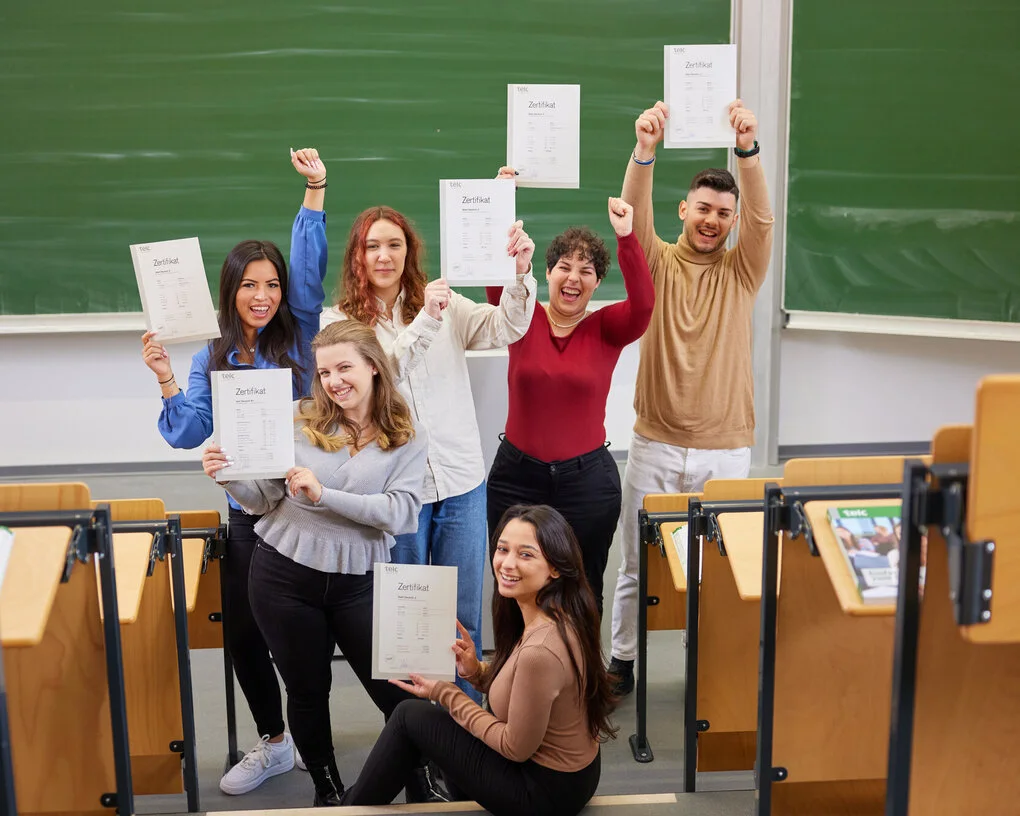
At German B2 level, you can understand the main ideas of demanding texts, discuss a range of topics and express your views with increasing confidence. That does not mean you understand everything or speak without mistakes. At Sprachschule Unter der Eiche, we help you turn B2 language goals into skills you can use in work, study and everyday situations in Germany, with the CEFR and telc Deutsch B2 as helpful reference points.
What does German B2 level mean in practice?
B2 is described as upper-intermediate proficiency within the Common European Framework of Reference for Languages (CEFR). At this level, you should be able to take part in discussions with a degree of fluency, follow the main ideas in more complex material and communicate an opinion with supporting reasons. This is about what you can do with German, not merely how many words you know.
The official telc Deutsch B2 examination tests receptive and productive language skills, including reading, listening, writing and speaking. It provides a structured way to demonstrate proficiency, but taking a course and earning the examination certificate are separate steps.
What can you do in everyday situations?
Imagine you need to explain a complicated problem to a service provider. At B2, you should increasingly be able to describe what happened, clarify what you need and respond when the other person asks questions.
For example: “Ich habe die Unterlagen bereits eingereicht. Könnten Sie mir sagen, ob noch etwas fehlt?” (I have already submitted the documents. Could you tell me whether anything is still missing?)
You should also be able to follow many longer conversations, compare alternatives and explain why you prefer one option. Difficult accents, specialist vocabulary and unfamiliar situations can still require clarification.
Can you use B2 German at work?

B2 skills can help you participate in meetings, explain a problem, draft routine professional correspondence and give reasons for a recommendation. Consider a colleague who asks why a deadline has changed. Instead of replying with one short sentence, you can describe the cause, its effects and the next action.
“Wir benötigen mehr Zeit, weil die Informationen noch nicht vollständig sind. Ich schlage vor, dass wir morgen erneut darüber sprechen.” (We need more time because the information is not yet complete. I suggest we discuss it again tomorrow.)
Some regulated professions require specific language certificates or additional recognition procedures. B2 proficiency alone is not automatic permission to work in every profession.
What can you do when studying in Germany?
You may find it easier to follow explanations, ask for clarification, contribute to discussions and read more detailed texts. You can practise summarising a short article or comparing two viewpoints rather than simply answering yes-or-no questions.
However, university admission is a separate matter. Some programmes require C1 or specific recognised qualifications; others have different language rules. Always check the institution and programme you plan to enter. If your next goal is a higher language level, explore our German C1 course after assessing whether you are ready.
What B2 speaking skills should you practise?

Try explaining an opinion for two minutes. Give a reason, introduce an example and respond to a possible objection. You could discuss working from home, public transport or the value of learning languages. A useful structure is: state your view, explain why, add a contrasting point and give a short conclusion.
“Ich bin der Meinung, dass regelmäßiges Üben wichtig ist, weil man dadurch sicherer spricht.” (I believe regular practice matters because it helps you speak more confidently.)
You do not need to use long or unusual words in every sentence. Clear, connected ideas are more valuable than rehearsed complexity.
What should you understand when reading and listening?
At B2, you should work towards understanding the key messages and important details in a wider range of written and spoken materials. Practise following an interview, reading an explanatory article and identifying the reasons behind an argument.
If you hear a word you do not know, use surrounding context rather than stopping immediately. Then check your understanding by explaining the message in your own words. This habit helps in classroom learning and in ordinary conversations.
What can you write at B2 level?
You can practise clear emails, structured explanations and short arguments. For example, you might write to ask for a change to an appointment:
“Sehr geehrte Damen und Herren, leider kann ich den vereinbarten Termin am Montag nicht wahrnehmen. Wäre es möglich, einen neuen Termin in der kommenden Woche zu vereinbaren? Vielen Dank für Ihr Verständnis.”
The message is polite, explains the request and makes the next step clear. Build your writing skill by checking whether your reader can understand your purpose without asking a second question.
How can you check whether you are ready for B2?

Ask yourself whether you can explain a viewpoint, follow a substantial conversation, understand the main message of an article and write a connected text about a familiar topic. If one area feels much harder than the others, that gives you a useful study goal.
Self-assessment is not an official examination. The telc Deutsch B2 materials describe the examination structure and provide preparation resources. They can help you understand the type of performance expected, while a teacher or placement assessment can help you choose an appropriate learning level.
Learn B2 German with our academic team
At Sprachschule Unter der Eiche in Würzburg, we focus on practical communication alongside CEFR-aligned learning objectives. Our German B2 course is intended for learners building advanced everyday and professional skills. You can enquire about the course if you want structured lessons and opportunities to practise across speaking, listening, reading and writing.
If you need a formal qualification, also review our telc exam information. We can explain learning and preparation options, but the authority, employer or university receiving your certificate determines which proof is acceptable.
Frequently asked questions
Is B2 German fluent? B2 indicates a meaningful degree of independent communication, not native-like accuracy or understanding in every situation.
Is B2 enough for university in Germany? Not necessarily. Check your specific programme’s language and examination requirements.
Does passing a B2 course automatically give me a B2 certificate? No. Course completion and a recognised examination result are different.
What should I practise most? Build all four skills and give particular attention to the activities you need for your own goals.
Official reference
telc: telc Deutsch B2 examination
For a comparison with other CEFR levels, see our guide to German language levels.
Learn more about Sprachschule Unter der Eiche and explore our German B2 course for structured language learning in Germany.