


German B1 Exam Preparation: What to Study for the TELC Exam

If you are preparing for the TELC German B1 exam, your study should focus on the skills the exam actually tests: reading, language elements, listening, writing, and speaking. The TELC B1 exam consists of a written examination and an oral examination, and it is designed to show that you can communicate in everyday personal and professional situations at CEFR level B1. At Sprachschule Unter der Eiche, we recommend preparing in a way that combines exam familiarity with real communication practice. At B1 level, you are expected to understand connected texts, express your ideas more clearly, and respond with more independence than at A1 or A2. That means your preparation should be structured, balanced, and closely aligned with the actual TELC format. What the TELC German B1 Exam Covers Before you start revising, it helps to know what the exam includes. TELC states that the written examination covers Reading (3 parts), Language Elements (2 parts), Listening (3 parts), and Writing (1 part). The oral examination includes Speaking (3 parts), is usually taken as a pair examination, and includes 20 minutes of preparation time. TELC also notes that the mock examination includes a complete test with solutions and audio files, which shows the expected structure and assessment approach. In practical terms, this means you should prepare for: understanding written texts and grammar in context listening for both key details and overall meaning writing clear and relevant responses speaking in a connected and confident way about familiar topics. What to Study for Reading, Listening, and Language Elements For the reading section, you should practise working with short and medium-length texts such as emails, notices, information pages, and everyday articles. At B1, the goal is not only to recognise words, but to understand the main point, find important details, and follow connected ideas. TELC describes B1 learners as being able to understand and produce simple, connected texts on familiar topics. For listening, your preparation should focus on following conversations, announcements, and practical audio tasks without needing to understand every single word. Listening at B1 is about identifying the main message, catching relevant details, and responding appropriately. Language elements should also be part of your revision. Because TELC tests grammar and language use in context, it is important to revise sentence structure, verb forms, connectors, and other grammar points as part of meaningful tasks rather than in isolation. What to Study for the Writing Section The writing section tests whether you can express yourself clearly in written German at an intermediate level. At B1, that means writing in a more organised and connected way than at lower levels. Your preparation should therefore include writing short emails, messages, and practical responses that are relevant to everyday life, work, or study. As you prepare, focus on: organising your ideas clearly using the right tone for the task connecting sentences logically checking grammar and word order choosing vocabulary that is natural and relevant. Good B1 writing is not about sounding overly complex. It is about being clear, appropriate, and easy to follow. That is exactly the kind of communication the exam is designed to assess. What to Study for the Speaking Section? The speaking section is where many learners need the most active practice. TELC explains that the oral exam has 3 parts, is usually done in pairs, and includes 20 minutes of preparation time before the exam begins. This means you need to be ready not only to speak, but also to interact with another person in a structured way. To prepare well, you should practise how to: introduce a topic clearly describe experiences and plans express opinions and give simple reasons ask relevant questions respond naturally to another speaker. At Sprachschule Unter der Eiche, we always encourage you to practise speaking out loud as often as possible. At B1 level, confidence and interaction matter just as much as accuracy. The more often you use German actively, the more manageable the speaking section becomes. Vocabulary and Grammar to Revise Your German B1 exam preparation should include vocabulary that supports everyday personal and professional communication. TELC describes B1 as the level where you can communicate in a simple and coherent way in daily life, at work, and when travelling, and where you can participate in conversations about family, hobbies, work, current events, experiences, goals, and opinions. That means your revision should cover topics such as: work and education travel and transport family and relationships housing and services health and appointments everyday current topics and practical situations. For grammar, focus on the structures that help you communicate independently, such as: past tense forms modal verbs reflexive verbs word order in main and subordinate clauses common connectors question forms and response structures. Common Mistakes to Avoid A common mistake in TELC B1 preparation is focusing too much on grammar and not enough on practical use. Another is memorising vocabulary without learning how to use it in connected sentences. Many learners also avoid timed practice, do too little listening, or leave speaking until the last minute. Because the exam is skills-based, preparing only one area is rarely enough. A better approach is to work across all sections regularly. Short, consistent study sessions that include reading, listening, writing, grammar in context, and speaking practice usually lead to much better results than last-minute revision. Prepare with Our TELC Preparation Course If you want more structure and guidance, our TELC Preparation Course at Sprachschule Unter der Eiche can help you prepare in a more focused way. On our course page, we explain that we offer preparation courses for TELC exams, including A2/B1 options, and learners can also book their course directly through the site. With guided preparation, you can work more systematically on weaker areas, practise speaking with more confidence, and become more familiar with the exam format and expectations. For many learners, this makes preparation feel more manageable, more targeted, and far less stressful. Download a TELC B1 Mock Exam Want to see what the
What Is B1 Level in German Language?

The B1 level in German language is the stage where your German becomes more independent, practical, and flexible. At this level, you move beyond basic survival phrases and begin to communicate with more confidence in everyday life, study, and work. At Sprachschule Unter der Eiche, the B1 course is designed for learners who already have an A2 foundation and are ready to express themselves more clearly, understand more detailed information, and use German in a wider range of real-life situations. This makes B1 one of the most important steps in the CEFR German levels. It is the point where learners begin to connect ideas more naturally, take part in longer conversations, and handle situations with less dependence on memorised phrases. Rather than focusing only on simple questions and answers, the B1 level develops the language skills needed for more active participation in daily communication. Sprachschule Unter der Eiche presents its B1 course as a structured intermediate programme that supports steady progress and prepares learners for the next level. Who Is the B1 German Course For? The B1 German course is designed for learners who have completed A2 or who already have a strong basic knowledge of German and want to progress to a more independent level. It is suitable for learners who can already manage simple everyday communication but want to expand their vocabulary, improve their grammar, and express themselves more confidently in a broader range of situations. At Sprachschule Unter der Eiche, this course is especially suitable for learners who want stronger German for: everyday life in Germany work and workplace communication study or training official language requirements progression to B2 This means the course is a good fit if you are no longer a complete beginner and want to move from simple communication towards more connected and practical language use. If you have studied German before but are unsure whether B1 is the right level for you, the school also recommends a placement test to help determine the most suitable course. What Is Covered in the B1 German Course? At B1 level, the content becomes broader and more detailed than at A1 or A2. The course is designed to help you communicate more confidently across personal, academic, and professional contexts. According to the B1 course page at Sprachschule Unter der Eiche, the curriculum includes expanded vocabulary, more developed grammar, and practical communication tasks that reflect real-life language use. The course covers: expanded vocabulary for topics such as work, education, travel, media, and health core grammar including modal verbs, reflexive verbs, past tense forms, and more complex sentence structures language for describing experiences, giving opinions, explaining plans, and responding appropriately structured practice in reading, listening, writing, and speaking communication in both social and more formal situations This is where B1 becomes much more practical. Instead of relying only on short and predictable exchanges, you begin to work with more detailed language and develop the ability to communicate in a more natural and connected way. What Skills Do You Build at B1 Level? A strong B1 German language course develops all four core language skills: speaking, listening, reading, and writing. At Sprachschule Unter der Eiche, the B1 programme is designed to build these skills together through structured lessons and modern teaching methods that support measurable progress. Speaking At B1, speaking becomes more than answering simple questions. You begin learning how to take part in longer conversations, share your opinions, talk about experiences, and explain your plans more clearly. The aim is to help you communicate more confidently and with less hesitation. Listening Your listening skills also improve significantly at this level. You work on understanding the main points of spoken German in conversations, audio tasks, and practical everyday interactions. This helps you follow spoken communication with greater ease and respond more naturally. Reading Reading at B1 moves beyond very short beginner texts. You begin working with more detailed materials such as emails, notices, articles, and texts related to work or study. This helps you build confidence in understanding written German in more realistic contexts. Writing At this stage, writing becomes more structured and accurate. You practise producing clearer written communication with stronger sentence structure, more developed grammar, and better organisation of ideas. What Will You Be Able to Do at the End of the Course? One of the most important questions for learners is what they should actually be able to do after completing the course. At Sprachschule Unter der Eiche, the B1 course is designed to help you communicate with more confidence and independence in a much wider range of everyday situations. By the end of the B1 course, you should be able to: take part in conversations about work, study, travel, and everyday life with more confidence express your opinions, describe experiences, and explain plans more clearly understand the main points of spoken German in conversations and audio materials read more detailed texts such as emails, notices, articles, and workplace- or study-related content write more clearly and accurately using stronger grammar and sentence structure These outcomes show why B1 is such a valuable level. It is the point where German becomes much more usable in real life. You are no longer limited to very basic communication, and you begin to interact with greater independence. Why B1 Is an Important Milestone? The B1 level in German language is often seen as a major turning point because it gives you a much stronger foundation for life in Germany. Whether your goal is work, study, official requirements, or personal development, B1 helps you communicate more reliably and more confidently. It also creates a clear pathway towards B2, which is often the next important step for learners with academic or professional goals. Sprachschule Unter der Eiche also notes that its B1 course supports future exam preparation and continued language progression. For many learners, B1 is the stage where German begins to feel less like a classroom subject and more like a language they can
German A1 Exam Preparation: What to Study for the TELC Exam

If you are preparing for the TELC German A1 exam, the best way to start is by understanding what the exam is actually designed to test. At German Language A1 level, you are not expected to use advanced German. You are expected to understand and use simple German in everyday situations through listening, reading, writing, and speaking. TELC explains that the exam includes a written part with reading, listening, and language elements, followed by tasks in writing and speaking. The oral section also includes interaction with both a partner and the examiner. At Sprachschule Unter der Eiche, we encourage you to prepare with both the exam format and the real-life language skills in mind. A1 exam success is not about memorising random vocabulary lists. It is about preparing in a structured way, revising the right beginner topics, and becoming confident enough to respond clearly under exam conditions. Our German language courses are structured according to CEFR levels and focus on level-appropriate grammar, vocabulary, practical communication, and exam preparation, which is exactly the kind of support A1 learners need. What the TELC German A1 Exam Covers Before you begin revising, it helps to know the likely coverage of the exam. In the TELC German A1 exam, you will need to work across all four main language skills. TELC describes the exam as task-based and action-oriented, with tasks such as multiple-choice questions, matching tasks, and prompt-based responses. In other words, you are tested on whether you can use simple German in familiar situations, not whether you can explain complex grammar rules. You should therefore prepare for: Listening to short everyday audio tasks Reading simple texts such as signs, messages, and forms Writing short and clear responses Speaking in simple personal and everyday situations How to Prepare for the Listening Section? In the listening section, your goal is to catch the most important information. At A1 level, you do not need to understand everything word for word. You need to listen for key details such as: names numbers times and dates prices places short requests or announcements When you prepare, try to train your ear for these details instead of trying to translate every sentence in your head. This will help you stay calmer and work more efficiently during the exam. How to Prepare for the Reading Section? For reading, you should expect short, practical texts rather than long passages. Your reading practice should include: signs and notices short messages simple emails forms advertisements basic public information A common beginner mistake is spending too much time on single unfamiliar words. Instead, train yourself to look for the overall meaning and the key information. In the exam, that skill is often more useful than perfect translation. How to Prepare for the Writing Section? The writing section at A1 is about short, practical written communication. You are not expected to write long paragraphs. You are expected to write clearly and simply. Your preparation should include practising how to: fill in basic personal information complete forms write short notes or messages respond to simple prompts use short sentence patterns correctly At this level, clear communication matters more than complexity. If your answer is simple but correct and understandable, that is much better than trying to write something beyond your level. How to Prepare for the Speaking Section? For many learners, speaking feels like the hardest part of the exam. In reality, the TELC A1 speaking section is designed for beginner communication. You may need to introduce yourself, answer simple questions, ask basic questions, and respond to familiar everyday topics. TELC also states that the oral part involves interaction with a partner and the examiner, so speaking practice should be active and realistic. To prepare well, you should practise how to: introduce yourself clearly answer simple personal questions ask short everyday questions speak about familiar topics such as family, daily routine, or appointments respond politely in short exchanges The more often you practise out loud, the more natural this part will feel. Vocabulary You Should Revise A large part of German A1 exam preparation is revising the right vocabulary. Since the exam focuses on everyday communication, you should spend time on vocabulary related to: personal information family numbers dates and times food and drink shopping transport housing daily routine appointments and everyday needs These are the topics most likely to support you across listening, reading, writing, and speaking tasks. Grammar You Should Revise At A1, your grammar revision should stay focused on beginner essentials. You do not need advanced grammar for this exam. You need the basics used correctly. The most useful grammar topics to revise are: present tense of common verbs basic word order question words yes/no questions negation articles pronouns simple modal verbs common sentence patterns These are the grammar areas that help you build short and correct sentences in everyday situations. Common Mistakes to Avoid As you prepare, try not to fall into the same traps many beginners do. The most common mistakes include: focusing only on grammar memorising vocabulary without using it in sentences avoiding speaking practice doing too little listening ignoring exam-style practice preparing without checking the TELC format Balanced preparation is always more effective. Since the exam covers multiple skills, your study plan should do the same. How We Recommend You Prepare? At Sprachschule Unter der Eiche, we recommend that you prepare in a simple and consistent way. You will usually make better progress when you: revise vocabulary by topic practise short listening tasks regularly read simple everyday texts write short messages speak out loud as often as possible use realistic mock exam materials Small, regular study sessions are usually much more effective than last-minute cramming. If you make German part of your weekly routine, the exam will feel much more manageable. Prepare with Our TELC Preparation Course If you want more structure and guidance, our TELC Exam Preparation Course can help you prepare in a more focused and confident
What Is In The A1 German Language Course?
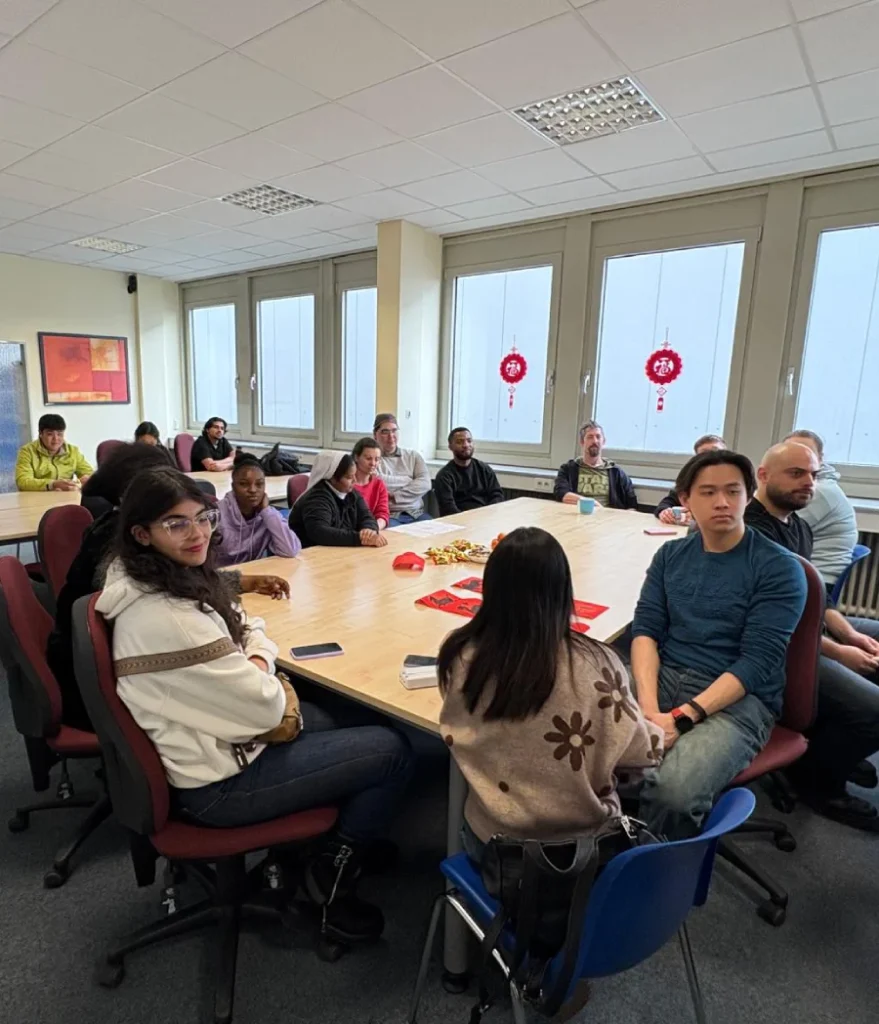
An A1 German Language course is the first step for beginners who want to build a solid foundation in the language. It introduces the core skills needed for simple everyday communication, including basic vocabulary, pronunciation, grammar, and practical speaking. At Sprachschule Unter der Eiche, the A1 German course is designed to help learners begin using German in real-life situations while preparing for the next stage of language learning. Starting at A1 is important because it shapes how comfortably and confidently a learner moves forward. A well-structured beginner course should not only teach a few basic words and phrases. It should help students understand how the language works, how to form simple sentences, and how to manage common situations in daily life. That is what makes the A1 level such an important part of the German learning journey. Who Is the A1 German Course For? The A1 German course is designed for complete beginners and learners with very limited prior knowledge of German. It is suitable for anyone who wants to start learning the language in a structured, supportive, and practical way. This course is especially suitable for: learners starting German from scratch international students preparing for life in Germany new arrivals who need German for daily communication people who want to build a strong foundation before progressing to A2 learners who need beginner German for everyday situations such as appointments, transport, shopping, housing, and social interaction At this stage, the goal is not fluency. The focus is on becoming familiar with the language, building confidence, and learning how to communicate in simple and useful ways. For many learners, A1 is where German begins to feel more approachable and manageable. What Is Covered in the A1 German Course? The A1 course covers the essential building blocks of beginner German. It introduces the language step by step and helps learners understand how German is used in practical, everyday situations. The course typically includes: the German alphabet and pronunciation basics simple spelling patterns and sound recognition essential German vocabulary for daily life beginner grammar and sentence structure question forms and negation basic articles and noun forms first steps with cases such as Akkusativ and Dativ guided speaking, listening, reading, and writing practice A major part of the course is learning vocabulary that is relevant to real life. Instead of focusing only on isolated words, learners build language around useful topics such as: personal information and introductions family and relationships food, shopping, and meals time and daily routine transport and directions housing and appointments health and leisure work and simple social situations This gives learners a practical base they can actually use outside the classroom. At the same time, grammar is introduced in a simple and manageable way so that students can begin forming correct sentences early on. Topics such as sentence order, asking questions, and using common articles help learners understand the structure of the language without feeling overwhelmed. What Will You Be Able to Do at the End of the Course? By the end of the A1 German language course, learners should be able to manage simple everyday communication with more confidence. The goal is not advanced conversation, but the ability to understand and use basic German in familiar situations. At the end of the course, learners are typically able to: introduce themselves and share basic personal information ask and answer simple questions understand and use common everyday phrases handle simple interactions in shops, appointments, and public places talk about daily routines, family, and basic needs understand short signs, messages, and simple written texts write short notes, forms, or simple messages take part in basic conversations when the language is clear and familiar These outcomes make A1 a very practical level. Learners leave the course with a foundation they can use in daily life and continue building on in future levels. A Strong Foundation for Learning German The A1 German course at Sprachschule Unter der Eiche, the leading German Language school in Germany, gives beginners a clear and practical introduction to the language. It is designed for learners who need structure, support, and real-life communication skills from the beginning. With a focus on useful vocabulary, essential grammar, and everyday situations, our German language courses help students start German with confidence and purpose. For anyone beginning their German learning journey, A1 is where the foundation is built. A strong start at this level makes future progress smoother, clearer, and much more rewarding.
Can I Learn German Online?

Yes, you can learn German online, especially if your goal is to build basic vocabulary, improve listening, and study at your own pace. However, while self-guided online learning can be a useful starting point, many learners make faster and more reliable progress through an official language school, whether classes are in person or taught virtually with a real teacher. Online German learning has become more accessible than ever. Apps, recorded lessons, digital exercises, and self-paced study plans make it possible to start learning from almost anywhere. For beginners, this flexibility can be appealing, especially when fitting language learning around work, study, or family life. At the same time, not all online learning delivers the same results. There is a major difference between following online guides on your own and studying through an official German language school with a qualified teacher, structured progression, and real interaction. At Sprachschule Unter der Eiche, many learners come to us after starting with self-study and realising they need more guidance, correction, and speaking practice to make meaningful progress. Online Self-Study vs Learning with a Real Language School This is where the real difference becomes clear. 1. Self-Guided Online Learning Self-guided online learning usually means learning without a real teacher. You may use apps, recorded lessons, downloadable worksheets, or lesson plans that tell you what to study next. This type of learning can be helpful for: flexible study times lower upfront cost basic vocabulary building short grammar review beginners who want a simple introduction However, there are also clear limitations. When you study German on your own, you may not know whether your pronunciation is correct, whether your sentence structure sounds natural, or whether you are using the right grammar in real communication. You can finish many online exercises and still feel unprepared for real conversations. 2. Language School Learning — In Person or Virtual A language school offers a much more structured learning experience. Whether classes are held in person or virtually, the key difference is that you are learning with a real teacher, a guided curriculum, and clear progression. This usually includes: live teaching immediate correction speaking and listening practice lesson structure by level interaction with other learners support for TELC exams and practical goals For many learners, this makes the learning process more efficient and less frustrating. Why German Is Harder to Learn Alone Than It First Seems German is a language with clear rules, but it also has features that can be difficult to manage without guidance. Learners often struggle with: articles and noun gender word order verb placement case system sentence endings formal and informal usage When you study alone, it is easy to misunderstand a rule or apply it incorrectly again and again. Without feedback, small mistakes can become long-term habits. This is one reason many learners plateau even after spending months with apps or online lesson plans. The Problem with Learning Without Feedback One of the biggest weaknesses of self-guided learning is the lack of correction. You may think you understand a topic because you completed the lesson, but that does not always mean you can use it accurately in speaking or writing. Feedback matters because it helps you: notice recurring mistakes improve pronunciation use grammar more naturally build confidence when speaking understand how German is actually used in context A real teacher can explain what went wrong, why it happened, and how to fix it. That kind of support is difficult to replace with self-study alone. Can Virtual Language School Classes Be Just as Effective? Yes, in many cases they can. Virtual classes through an official language school are very different from studying alone with online materials. You still learn online, but you learn with a teacher, classmates, structure, and live interaction. This makes virtual language school learning a strong option for learners who want: the convenience of studying from home a real classroom experience regular speaking practice teacher support clear progression from one level to the next For many people, this offers the best balance between flexibility and quality. Which Option Is Better for Beginners? For complete beginners, self-guided online learning can be a useful way to start. It can help you become familiar with common words, greetings, pronunciation, and simple sentence patterns. However, beginners also benefit greatly from learning the basics correctly from the start. A language school can help you build a stronger foundation in grammar, pronunciation, and communication, which can save time later and reduce confusion as the language becomes more complex. Final Answer So, can I learn German online? Yes, you can. Online self-study can be a useful way to begin, especially if you want flexibility and a low-pressure introduction to the language. However, if you want stronger progress, better speaking skills, clearer grammar, and support for real-life goals, an official language school is the better option. At Sprachschule Unter der Eiche, we support learners through structured German Language courses with real teaching, clear progression, and practical language development. Whether you choose in-person lessons or virtual classes, learning with a real school gives you the support that self-guided online study often cannot.